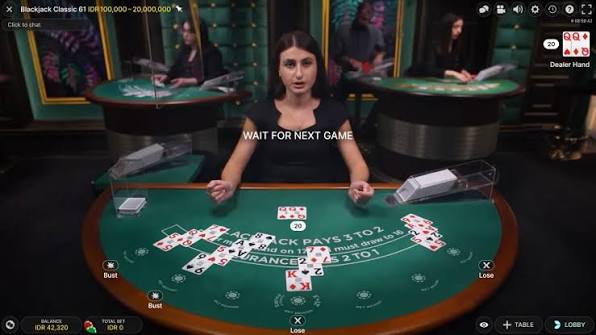
Classic Blackjack
★ 4.8/5
RTP: 99.50% 
A complete set of blackjack rules for beginners and intermediate players: the goal of the game and card values, how the cards are dealt and how many decks are in play, every player action (hit, stand, double, split, insurance, surrender), how the 3:2 and 6:5 payouts work, the dealer's rules on soft 17, and the rule variations that move the house edge.
The goal is to reach 21, or get closer to it than the dealer, without going over. A bust — 22 or more — is an automatic loss. You don't have to hit exactly 21, and you're not competing with the other players: it's a duel with the dealer alone, hand by hand. Cards 2 through 10 are worth their face value, the picture cards (jack, queen, king) count as 10, and the ace is 1 or 11 — whichever helps your hand. A two-card 21 (an ace plus a ten or a picture card) is a natural blackjack, the strongest hand in the game, and it pays a premium 3:2.
Every round follows the same sequence, from bet to settlement:
Put your chips in your box before any cards are dealt. The minimum and maximum are posted at the table; the size of your bet doesn't change the odds — your decisions do.
You receive two cards face up; the dealer takes one face up (the upcard) and one face down (the hole card). In the European variant the dealer takes the second card only after players' first move.
On your hand you hit, stand, double, split, or surrender. If the dealer shows an ace, insurance is offered first.
The dealer reveals the hole card and plays by a fixed rule: hits on 16 or less, stands on a hard 17. On a soft 17 it stands (S17) or hits (H17), depending on the table.
Hands are compared. Closer to 21 wins, a tie is a 'push' (your stake is returned), a blackjack pays 3:2. Then a new hand, or step away.
Every card has a fixed point value. Cards 2 through 10 count as printed; jack, queen, and king are 10 each; the ace is the only flexible card — it counts as 11 unless that would bust you, in which case it drops to 1. A hand where the ace counts as 11 is called 'soft' (for example, ace-6 is a 'soft 17'): it can't bust on a single card, because the ace can always be squeezed down to 1. A hand with no ace, or with an ace forced to 1, is 'hard'. Suits play no role in blackjack — only the point total matters.
What each result returns on a $10 bet (3:2 blackjack).
| Outcome | Pays | $10 bet returns |
|---|---|---|
| Natural blackjack (21 on two cards) | 3:2 | 10 + 15 = 25 |
| Win with a stronger hand | 1:1 | 10 + 10 = 20 |
| Push (tie) | — | 10 (stake back, no profit) |
| Loss to the dealer or bust | — | 0 (stake lost) |
| Insurance wins (dealer blackjack) | 2:1 | 5 insurance − 10 main = break even |
| Surrender | ½ back | 5 returned, 5 lost |
Once you have your two cards but no blackjack, you choose from up to six actions. Hit — take another card; safe on low hard totals (11 or under). Stand — take no more; on strong hands and against a weak dealer card. Double — double your bet and take exactly one card; strong on hard 9, 10, or 11 against a weak dealer. Split — break a pair into two hands with a second matching bet; always split aces and 8s, never split 10s or 5s. Insurance — a side bet against a dealer ace (decline it). Surrender — where allowed, give up half your stake and end the hand; correct on a hard 16 against a strong dealer card.
Some blackjack rules are variable: whether a given table offers them is optional and doesn't automatically place the table in a specific game variant. These rules don't change how you play the cards in your hand — they change the math underneath. The single biggest factor is the blackjack payout (3:2 vs 6:5); after that come the dealer's soft-17 rule, the doubling and splitting permissions, the availability of surrender, and the number of decks. Always weigh deck count and payout together: a 6-deck shoe at 3:2 beats a single-deck table at 6:5.
How independent table rules move the house's advantage.
| Rule | Effect for the player |
|---|---|
| Dealer stands on soft 17 (S17) | Favourable (baseline) |
| Dealer hits soft 17 (H17) | +0.2% house edge |
| Double after split (DAS) | +0.15% RTP (in the player's favour) |
| Surrender | Small gain for the player; early surrender is worth more |
| 6:5 payout instead of 3:2 | +1.39% house edge (avoid) |
| Fewer decks (1–2 vs 6–8) | Slightly in the player's favour |
Blackjack rightly belongs on the short list of the world’s most popular gambling games: luck decides a great deal here, but it’s understanding the rules — and knowing how to use them — that lets a player wring the most out of every hand. The exact rules change from table to table, so before you play, always check the conditions on offer where you’re sitting. Below is a complete set of rules that will dot every “i” for beginners and intermediate players alike.
Every card in the players’ and dealer’s hands is worth a set number of points. The aim is to reach 21, or get closer to it than the dealer, without going over. A bust — 22 or more — is an automatic loss. You play against the dealer: however many players sit at the table, only your hand and the dealer’s hand matter. On a tie (a push), when the totals are equal, your stake is returned in full. A natural blackjack — 21 on the first two cards — ranks higher than the same 21 built from three or more cards, and it pays a premium 3:2.
Important: a bust loses instantly — before the dealer even plays. This asymmetry (“the player acts first”) is the entire source of the house edge, which is why it’s better to under-draw than to over-draw.
For a quick reference, here’s a short summary of the rules.
| Rule | Description |
|---|---|
| Goal | Reach 21, or get closer to 21 than the dealer, without going over |
| Deal | Player — 2 face-up cards; dealer — one face up and one face down (hole card) 1 |
| Card values | Ace — 1 or 11; 10 and pictures — 10; the rest at face value |
| Player actions | Hit — take a card; Stand — stop; Double — double the bet and take one card; Split — split a pair; Surrender — fold for half the stake 2 |
| Dealer rules | Hits on 16 or less, stands on hard 17 (on soft 17 — hits or stands per table rules) |
| Payouts | Ordinary win 1:1; blackjack 3:2; insurance 2:1; push — stake returned |
A hand’s value is the sum of the values of its individual cards. It’s not hard to memorise.
| Card | Points |
|---|---|
| Ace | 1 or 11 (whichever helps the hand’s owner) |
| 10, jack, queen, king | 10 |
| 2–9 | Face value |
From this you can see that 21 can be made with just the first two cards — an ace and any ten-value card. That combination is called a natural blackjack, the strongest hand in the game. Suits (hearts, spades, clubs, diamonds) don’t affect the points — only the total matters.
Different kinds of hand mean different things for the player:
At the start of a round the dealer gives each player two cards, in most versions face up so everyone at the table can see them; only in some single- and double-deck games are the cards dealt face down to make counting harder. The dealer also takes two cards, but only one is face up (the upcard), the other face down (the hole card). In European blackjack and a number of other variants the dealer doesn’t take the second card at all until players have made their first move. If no one has a natural blackjack, players and dealer draw more cards 3 — using the “Hit”, “Double”, and “Split” actions. After the first two cards, further cards are dealt one at a time per hand and only on the player’s request (a player who has split may have two hands or more).
The game uses standard 52-card decks without jokers. A single deck is enough to deal from, but casinos far more often offer a shoe of 6–8 decks (2- and 4-deck versions also exist). The fewer the decks, the easier it is to predict a specific card coming out 4 — which gives a player who can count a small edge, so single- and double-deck blackjack is rarer, and a natural 21 there more often pays a reduced 6:5 instead of the standard 3:2.
Once dealt two cards but without a natural blackjack, the player decides what to do next. Let’s go through the available moves.
You can only win if your hand beats the dealer’s — but busting is not allowed. So with an already strong hand (say 19–20) you should stand: your chances are high as they are, and almost any card would bust you. Conversely, on a small total you need to hit — a single card won’t bust you, and without drawing you’ll almost certainly lose (your only hope being a dealer bust). Experienced players also watch the dealer’s upcard, sizing up what their hand might be.
Seeing strong chances to win, a player can double the bet. This makes sense on 9–11 (any ten — and on 9–10 also an ace — makes the hand very strong), when the dealer’s upcard is weak and they’re likely to under-draw or bust. But doubling doesn’t guarantee a win: by the rules you take only one card afterward. If it’s a small card (or, on 11, an ace), the dealer can beat you, and you’ll lose a double stake.
If your cards form a pair, you may split the hand into two, matching your bet for the new hand. Whether to split depends on the pair:
Splitting aces is tied to the Re-Split Aces (RSA) rule: without it you can split a pair of aces only if they’re your first two cards; with it, one more split is allowed if a third ace arrives after the split.
Surrender isn’t in every variant, but it’s common. Seeing a weak hand and fearing a bust, the player gives up the fight before the round is decided, taking back half the stake and losing the other half. There are two approaches. Early surrender favours the player and is therefore rare — you can surrender even before the dealer checks for blackjack. Late surrender assumes the dealer checks their cards first, and if they have a natural blackjack you can no longer surrender — by that point you’ve lost.
Insurance against a dealer blackjack is a special side bet, available only when the dealer’s upcard is an ace. The player stakes half the main bet and, if the dealer has a natural blackjack, receives a 2:1 payout that offsets the loss of the main bet — you break even. But over the long run insurance is a loser: if the dealer has no blackjack, the insurance money is wasted. It’s been calculated that insuring consistently raises the house edge to 1.97%.
Important: always decline insurance, whatever your hand. The hole card is a ten less often than a fair 2:1 bet would need, so over time insurance only bleeds money.
Even money works much like insurance, but applies only when you already hold a blackjack. No extra stake is needed: you simply take a 1:1 payout on the main bet before the results are announced. The appeal is certainty: even if the dealer has blackjack, you get paid rather than pushed. It suits the casino because, when the dealer has no blackjack, you’re paid just 1:1 instead of the 3:2 or 6:5 you were due — that is, even money quietly turns your 3:2 hand into a 1:1 one.
You can’t think through your own moves without understanding the dealer’s rules. They’re simple, because the dealer never:
On 16 or less the dealer must take a card, while a hard 17 5 always means standing. The only question is the soft 17 6: if the dealer stands on it, that’s S17; if they keep drawing, that’s H17. S17 favours the player and is rarer: the dealer isn’t at bust risk yet, but no longer tries to improve the hand. Check where the dealer stands in the table rules before you start.
Important: all else equal, choose the S17 table — the H17 rule adds about 0.2% to the house edge.
The payout depends on how the round ends:
Tables that pay 6:5 on a natural blackjack are best avoided: on a $100 bet you’d win only $120, whereas at the standard 3:2 it would be $150.
Important: always read the payout on the felt before buying chips. A 6:5 table isn’t worth playing if a 3:2 table is open nearby.
Some variants carry special side bets with large payouts — for example, for a same-suit or same-colour hand, or for poker combinations made from the player’s cards and the dealer’s upcard. But these are more the exception: they aren’t very popular and they lower long-term RTP.
The winning condition is simple: score more than the dealer, but no more than 21. A round is lost when the player’s total is below the dealer’s, as well as on any busted hand. On equal totals it’s a tie (a push, with the stake returned) — but there’s no tie if both sides have 21 and one of them is a two-card natural blackjack (it wins) while the other is three cards or more.
Some blackjack rules are variable — whether a given table offers them is optional and doesn’t automatically place the table in a specific game variant (for example, surrender may or may not be present in both classic and European blackjack). Here are the main independent table rules that affect your experience and your edge:
And here’s how the variability of these independent rules moves the house’s advantage.
| Rule | Effect for the player |
|---|---|
| Dealer stands on soft 17 (S17) | Favourable (baseline) |
| Dealer hits soft 17 (H17) | +0.2% house edge |
| Double after split (DAS) | +0.15% RTP (in the player’s favour) |
| Surrender | Small gain for the player; early surrender is worth more |
| 6:5 payout instead of 3:2 | +1.39% house edge (avoid) |
| Fewer decks (1–2 vs 6–8) | Slightly in the player’s favour |
The 6:5 payout alone adds the casino about 1.39% — more than all the other variations combined. Different combinations of independent rules, plus the use of basic strategy and card counting (or going without them), mean blackjack’s RTP fluctuates quite substantially.
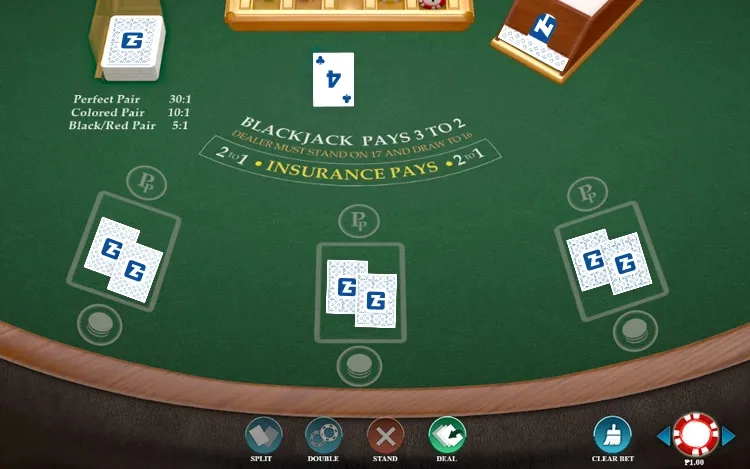
We’ve already noted that blackjack decisions depend on your hand and the dealer’s upcard, but you don’t need to recompute the best action every time: basic strategy 7 was worked out and verified by mathematicians long ago, and on our site it’s laid out in clear charts. When you use them, remember: each rule set needs its own chart. Most of the calls will match, but the “wrong” chart (say, an S17 chart at an H17 table) can cost roughly 0.2% of RTP.
At an online casino you can use the charts freely — no one’s watching; still, experienced players prefer to know them by heart, and the trainers available on our site help you drill their use.
In European blackjack a “no hole card” rule applies — the dealer doesn’t take the second card until players have made their first move after receiving two cards. ↩
In some variants there’s no surrender option at all; moreover, surrender rules differ — you’re allowed to surrender either before the dealer checks their hand for blackjack (early surrender), or after the check and only if the dealer has no blackjack (late surrender). ↩
In the European variant players make their first move first, and only then does the dealer take the second card. ↩
For example, in a single-deck game the appearance of all four aces means no ace will show before the shuffle, whereas in eight-deck blackjack even sixteen aces appearing doesn’t guarantee they’re finished. ↩
A 17-point hand that either has no ace at all or has one already counted as 1 — a high bust risk. ↩
A 17-point hand that contains an ace counted as 11 points. ↩
The recommended move for each game situation with the highest chances of winning. ↩