Classic Blackjack
★ 4.8/5
RTP: 99.50% A free in-browser blackjack table, basic-strategy guides, and independent casino reviews — everything you need to play smarter and cut the house edge to 0.5%.
Hand-picked by our editors. Filter by bonus type, payment method or minimum deposit to find your match.





No casinos match the current filters. Try widening them or click "All".
Blackjack is the most beatable game on the casino floor — with correct basic strategy the house edge drops to about 0.5%, far lower than slots or most table games. This site covers everything: the rules, basic strategy, card counting, the main variants, and the casinos worth your money.
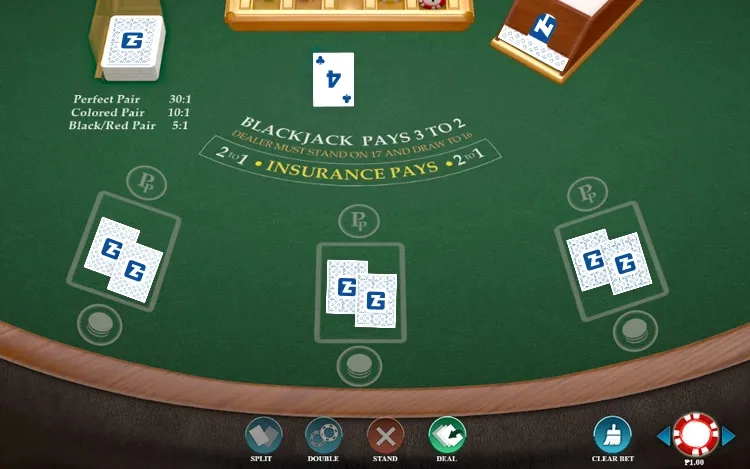
Start with the free practice table above — it deals a real 6-deck shoe with hit, stand, double, split and insurance, so you can drill your decisions on virtual credits before risking a cent. Then dig into our strategy guides and independent casino reviews.
Place your bet
Set your wager before any cards are dealt — chip up to the amount you want to risk.
Get your cards
You and the dealer each get two cards. Both of yours are face up; one dealer card stays hidden.
Read your total
Number cards count their value, face cards are 10, an ace is 1 or 11. Aim for 21 without going over.
Make your move
Hit for another card, stand to hold, double down for one card at twice the bet, or split a pair.
Dealer plays
The dealer draws to 17 and stands. Beat the dealer without busting and you win — a blackjack pays 3:2.
HD streaming, real cards, chat with the dealer.

Across every variation the goal is the same — reach 21, or get as close as you can without going over. The ideal hand is a blackjack: 21 on just two cards, an ace plus any ten-value card. The core rules are the same at every table, while each version’s finer points are covered on the rules page.
What you win or lose is decided by the cards the dealer hands you; the dealer draws cards too.
| Card | Value |
|---|---|
| Ace | 1 or 11 (your choice) |
| King, queen, jack | 10 |
| Number cards | face value |
The best hand is a blackjack: a plain 21 is worth slightly less than 21 made from two cards (any ten-value card plus an ace). You can also reach 21 with three or four cards — still a good result, but it loses to a true two-card blackjack.
Each round starts with two cards dealt to every player — fewer makes no sense. The dealer takes the same; different tables use a different number of decks, and at some the cards are dealt face up (which makes counting easier).
With two cards in hand, you choose what to do next based on your total:
Once every player chooses to stand, the cards are revealed.
At most casinos the dealer follows a fixed rule: draw until reaching at least 17, then stop. In variants with a hole card the dealer shows their first card immediately, so players can make an informed call on insurance.
When everyone stands, the hands are turned over. A player with a natural blackjack always wins unless the dealer matches it. A bust — any total above 21 — is an automatic loss. If both player and dealer reach 21, a two-card natural usually beats a three- or four-card 21. With different totals, the hand closer to 21 wins. With equal totals it’s a push — your stake is returned.
A full breakdown of every term lives in our blackjack glossary.
Blackjack comes in many variants: they may look only slightly different, yet those differences always shape how a hand plays — and sometimes the tactics you choose. Below are the most common tables, and a few you can try for free right away.
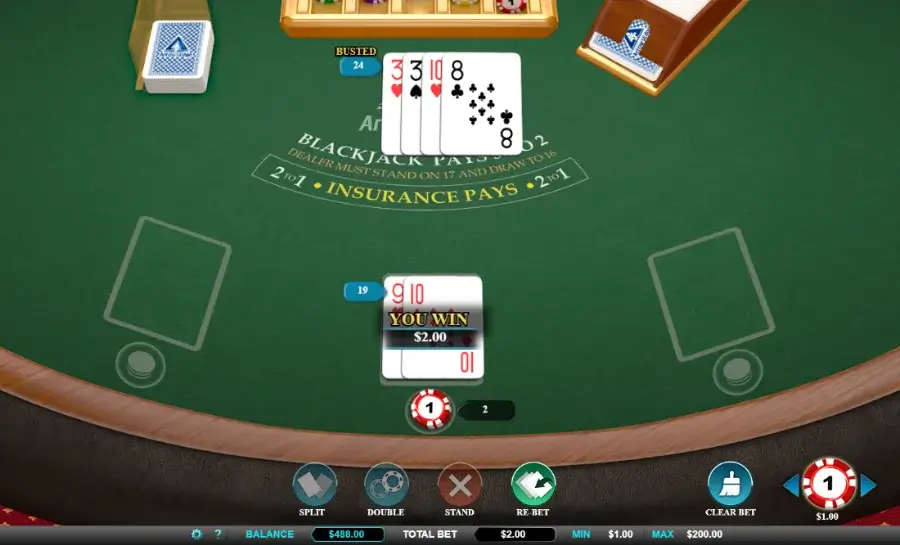

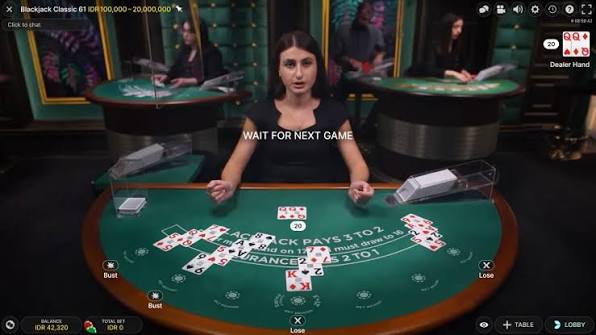
Live blackjack isn’t a separate rule set but a way of running the game: no random number generator, just a real dealer handing out physical cards in a studio. Players follow the action over a live video stream that creates the feel of being in a land-based casino. The format is prized precisely for that realism.
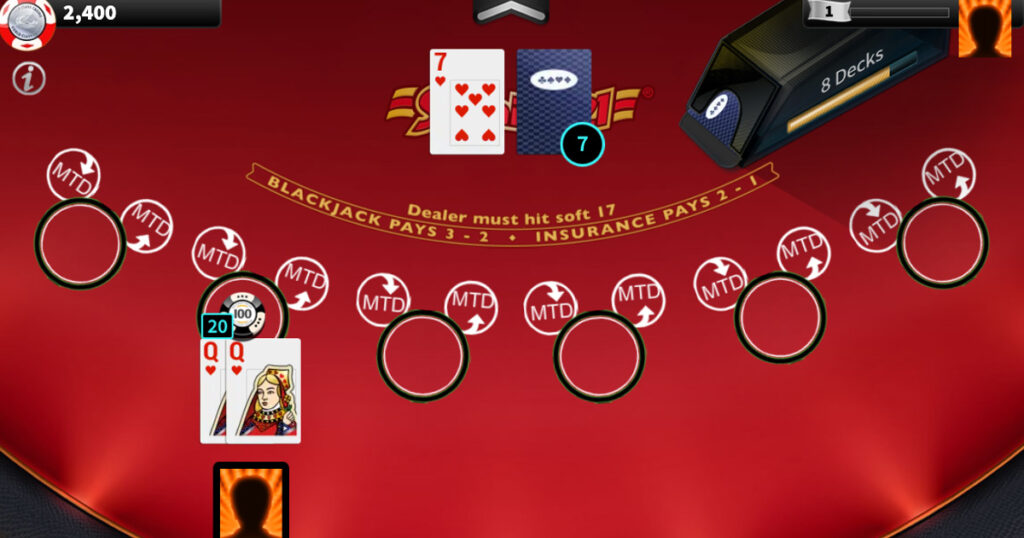
The classic variant uses eight 52-card decks (no jokers). The dealer has no say in how the hand is played: they must draw on 16 or less and stand on a hard 17 or higher. Only a soft 17 varies — at an S17 table the dealer stands on it, at an H17 table they take one more card.
Here a hand can’t be worth less than 15, but players are allowed not just to split but to re-split. A special rule: the most valuable hand is a five-card 21, which pays 2:1.
Played with four decks; the dealer stops the moment they reach 17. You can split up to four hands per player.
The dealer takes a second card only after every player has finished acting. If the dealer makes blackjack, the extra bets (doubles and splits) are returned to players.
A variant where you hold two hands at once: the top cards can be swapped between them — provided you double your bet.
Essentially classic blackjack with an extra bet: you can wager that your first two cards will be a pair.
Classic rules on eight decks. You can split up to four hands, but two aces can’t be split.
RTP (Return to Player) is the share of money wagered that is, on average, returned to players as winnings. You only reach the table figures over the long run: a single session can run hot or cold. The house edge and RTP always add up to 100%.
| Blackjack variant | House edge | RTP |
|---|---|---|
| Classic | 0.13% | 99.87% |
| Switch Blackjack | 0.16% | 99.84% |
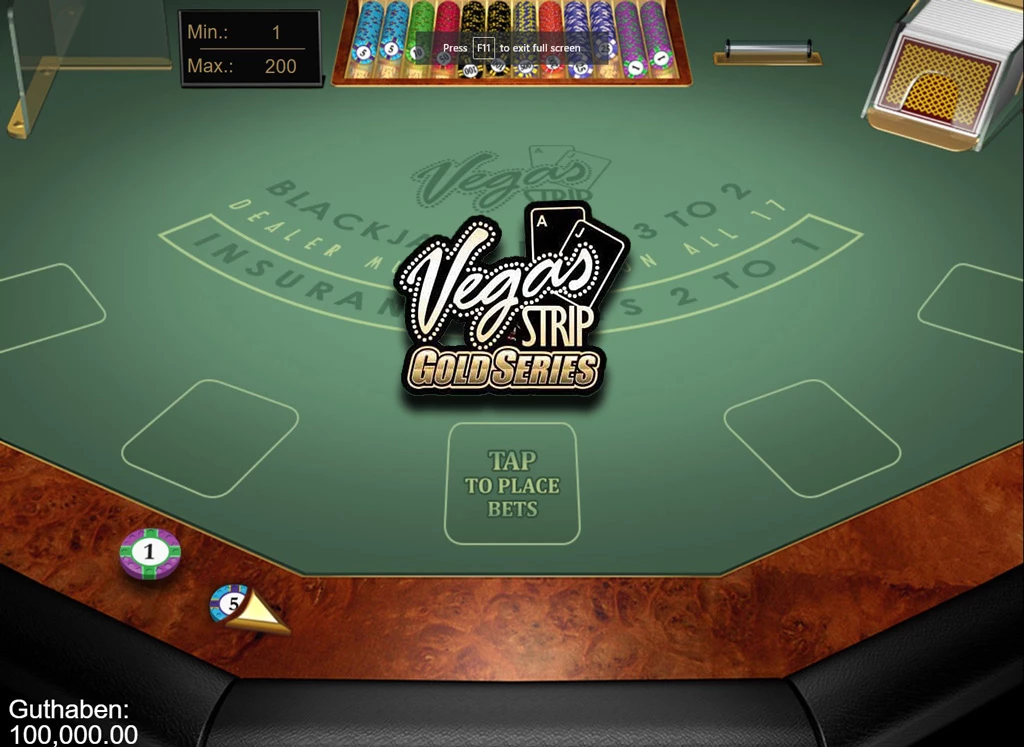
| Vegas Strip Blackjack | 0.35% | 99.65% |
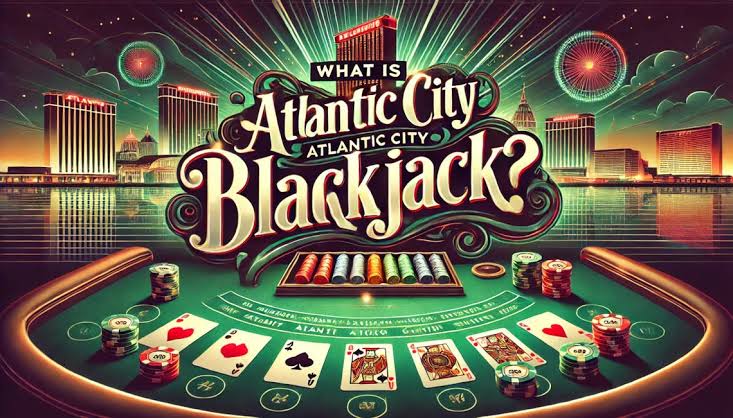
| Atlantic City Blackjack | 0.36% | 99.64% |
| Spanish 21 | 0.38% | 99.62% |
| Bonus Blackjack | 0.39% | 99.61% |
| Blackjack Surrender | 0.39% | 99.61% |
| European | 0.42% | 99.58% |
| High Streak Blackjack | 0.42% | 99.58% |
Some providers and casinos quietly lower a blackjack title’s RTP versus the same rules offline — always read the rules card first.
RNG variants usually have a demo mode — you can play with virtual credits the casino hands out without limit. Live blackjack offers no free mode.
| Real money | Demo mode | |
|---|---|---|
| Pros | real winnings on the line; access to bonuses and promos | no risk to your money; great for practice; often no signup needed |
| Cons | risk of losing your own money; the game can be addictive | winnings can’t be withdrawn; bonuses unavailable |
If you’re new to blackjack or to a particular variant, start with free play; once you’ve built some experience, move on to real-money stakes.
Basic strategy is a chart that tells you the optimal move for your hand against the dealer’s up-card. Seasoned players know it by heart, but the specific rule set matters too. Beginners should start with classic (American) rules and basic strategy. A few tips beyond the chart:
Before you play, study the tools (the available moves) in your specific version — that’s exactly what demo mode is for: on a free table you’ll see clearly where each action leads. In real-money play, an emotional move or a mis-click costs you. Watch the rule details too: you benefit from double-after-split being allowed, the dealer standing on soft 17, and a cap on how many cards a hand can take.
Sound bankroll management means splitting your funds into many base bets — that lets you ride out a long losing streak and, when needed, double down and split into every hand the rules allow. You can size your bet with a bankroll system, such as raising the stake after a loss to chase it back (as in the Martingale) — bearing in mind that no such scheme escapes the casino’s mathematical edge.
Dozens of casinos let you play blackjack, but your job is to pick the one with conditions that actually favour the player. The single biggest factor isn’t the welcome bonus — it’s the payout on a natural. Here is what we weigh before recommending a venue:
This site lists only casinos that pass these checks and keep proper 3:2 tables available.
Every operator claims their casino is the best, but they can’t all be. We rank venues by objective, blackjack-specific criteria rather than headline marketing:
Our rating is a shortcut: it spares you the trial and error of finding out the hard way that a site’s only blackjack table pays 6:5. The full breakdown of our criteria is on the how we rate casinos page.
A tempting welcome bonus is often the deciding factor for new players — but for a blackjack fan it deserves extra scrutiny, because blackjack rarely helps you clear it. Weigh every aspect of the offer, not just the headline figure.
The wagering requirement9 is the number you must replay the bonus through before any of it can be withdrawn. A $100 bonus at ×40 wagering means $4,000 in qualifying bets. Miss the deadline in the rules — often 7 days — and the bonus and any winnings from it are voided.
The catch unique to our game: game weighting. Slots usually count 100% toward wagering, but blackjack typically contributes just 10% — and sometimes 0%. On a 10% weighting, that same $4,000 requirement balloons to $40,000 in blackjack bets. Some operators exclude blackjack from bonus play entirely, or cap your maximum bet while a bonus is active.
Wagering shows how many times you must replay the gift before you can cash out the bonus balance. Examples for a $100 bonus, by multiplier — and what the same target looks like once a typical 10% blackjack weighting is applied:
The honest takeaway: a “blackjack bonus” is often a slots bonus in disguise. If you mainly play blackjack, a smaller bonus with fair weighting — or no bonus and a clean bankroll — usually beats a giant offer you can never realistically clear.
A bonus programme weighs heavily on which site you pick, but chase the real playthrough terms rather than the biggest headline figure:
A bonus isn’t the only thing to weigh when choosing a casino. At a minimum, check a few more things:
And don’t forget a broad table selection: since you’re reading a dedicated blackjack site, choose a casino that offers both live blackjack and RNG (including a demo mode) across a range of rules. How exactly we weigh these factors is set out on the how we rate casinos page. And however good the table, keep your budget in check and play responsibly.